
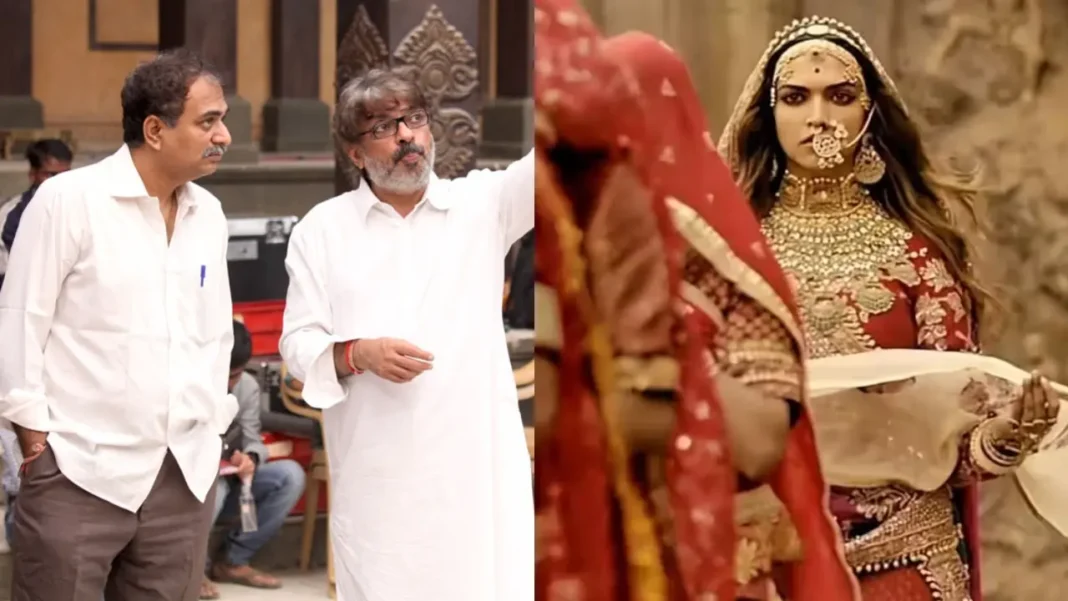

The debate surrounding Sanjay Leela Bhansali’s 2018 period drama Padmaavat has resurfaced after actress Swara Bhasker questioned the film’s depiction of the Jauhar sequence. Now, the film’s co-writer Prakash Kapadia has defended the controversial scene, saying it was presented after research and reflected the historical circumstances of that period.
Kapadia also described the renewed controversy over the scene as unnecessary, pointing out that Padmaavat had faced strong objections even before its release.
Prakash Kapadia Defends the Jauhar Sequence
Speaking to Hindustan Times, Prakash Kapadia said that the filmmakers did not create the Jauhar sequence without historical research.
According to Kapadia, the film was made based on the team’s research and material available in history books. He stressed that different viewers can interpret a film differently, but maintained that what was shown in Padmaavat, including the Jauhar sequence, represented the reality of the period portrayed in the film.
He further described the situation depicted in the film as one of “do or die”, referring to the circumstances surrounding the Rajput warriors and women during the conflict.
Kapadia also referred to the traditional practice of men dressing in saffron before going into battle, indicating that the sequence was intended to present the larger historical context rather than a contemporary interpretation of those events.
Kapadia Calls the Renewed Controversy Unwarranted
Reacting specifically to Swara Bhasker’s recent criticism, Kapadia said he had not been closely following her remarks but felt the controversy was not warranted.
He suggested that a viewer’s mindset and intention can influence how they perceive a film. According to him, someone watching a movie while actively searching for controversial elements or negativity may interpret scenes differently from someone simply watching it as a cinematic work.
Kapadia also recalled that Padmaavat had already been surrounded by protests and objections before audiences had even watched the film. He noted that the discussion continuing years after its release shows how strongly the subject continues to evoke different reactions.
Why Swara Bhasker Criticised the Scene
The latest controversy began after Swara Bhasker discussed the Jauhar sequence at a ‘Woman, Life, Freedom’ event held at the India International Centre in Delhi on August 31.
Bhasker revisited the open letter she had written to director Sanjay Leela Bhansali after watching Padmaavat in 2018. Her main concern was the message that the film’s depiction of Jauhar could potentially send to women who have survived sexual violence.
She questioned whether portraying death as preferable to surviving sexual assault could unintentionally create the impression that a woman’s honour or worth is tied to her sexual history. She also highlighted the depiction of a pregnant woman in the sequence as particularly troubling.
Her comments quickly went viral on social media and triggered strong reactions.
Swara Later Clarified Her Statement
Following the backlash, Bhasker clarified that she never called Rani Padmaavati or the women who performed Jauhar “cowards.”
In a video shared after the controversy erupted, she said her comments had been misunderstood and that she was discussing the broader message conveyed by the film’s climax.
Bhasker explained that her concern was about the possibility of rape survivors feeling that they should have died rather than survived sexual violence. She argued that women who survive such trauma should be recognised for their right to live and rebuild their lives.
Her clarification, however, has not ended the debate surrounding the film.
Eight Years Later, Padmaavat Debate Returns
Padmaavat, starring Deepika Padukone, Ranveer Singh and Shahid Kapoor, was one of the most controversial Hindi films surrounding its release. The movie faced protests and objections over its portrayal of historical figures and Rajput traditions even before it reached theatres.
The renewed discussion now reflects two very different perspectives.
Bhasker’s argument focuses on how historical practices are represented in modern cinema and the message audiences may take from them, particularly survivors of sexual violence.
Kapadia, meanwhile, has defended the sequence on the basis of historical context and the filmmakers’ research, arguing that the events depicted cannot simply be altered to fit present-day sensibilities.
As the discussion continues online, Padmaavat once again finds itself at the centre of a larger conversation about history, cinema, artistic interpretation and the responsibility of filmmakers when depicting sensitive subjects.